Dr. Sameer Chepurwar | Orthopedic & Joint Replacement Surgeon In Chandrapur
Comprehensive Occupational Rehabilitation at Shri Sai Gajanan Hospital by Dr. Shweta Chepurwar
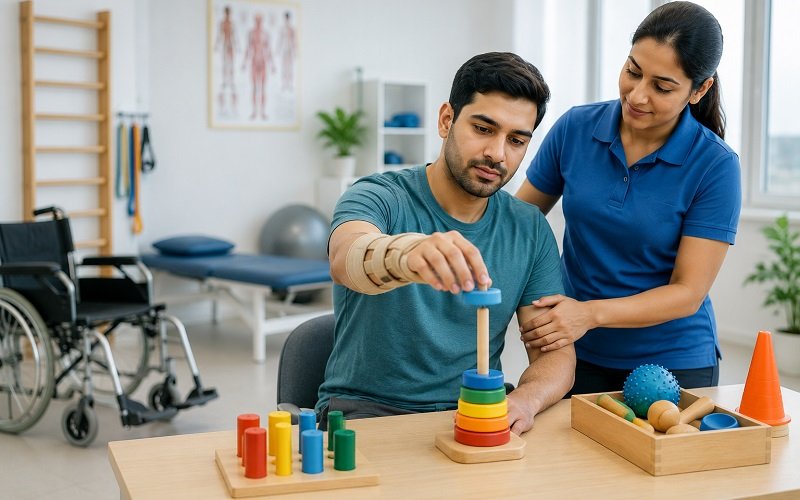
What is Occupational Rehabilitation?
Who Can Benefit from Occupational Rehabilitation?
Occupational rehabilitation is beneficial for children, adults, and elderly individuals recovering from:
- Stroke
- Traumatic Brain Injury
- Spinal Cord Injury
- Parkinson’s Disease
- Multiple Sclerosis
- Cerebral Palsy
- Autism Spectrum Disorder
- Developmental Delay
- Hand Injuries
- Fractures
- Joint Replacement Surgery
- Arthritis
- Orthopedic Injuries
- Neurological Disorders
- Sports Injuries
- Chronic Pain Conditions
- Work-Related Injuries
- Post-Surgical Recovery
Early rehabilitation improves long-term functional recovery and independence.
Signs You May Need Occupational Rehabilitation
You should consult a rehabilitation specialist if you experience:
- Difficulty performing daily activities
- Poor hand coordination
- Difficulty writing
- Reduced grip strength
- Problems with dressing or bathing
- Difficulty eating independently
- Reduced balance
- Muscle weakness
- Cognitive difficulties
- Difficulty returning to work
- Limited joint movement
- Reduced endurance
- Difficulty using household tools
Early intervention improves recovery and prevents long-term disability.
Conditions Treated Through Occupational Rehabilitation
Dr. Shweta Chepurwar provides rehabilitation for various medical conditions, including:
- Stroke Rehabilitation
- Hand Rehabilitation
- Neurological Rehabilitation
- Orthopedic Rehabilitation
- Post-Surgical Rehabilitation
- Developmental Disorders
- Pediatric Functional Rehabilitation
- Arthritis Management
- Joint Replacement Rehabilitation
- Cognitive Rehabilitation
- Fine Motor Skill Disorders
- Functional Mobility Disorders
- Workplace Injury Rehabilitation
- Chronic Pain Rehabilitation
Each rehabilitation program is customized according to the patient’s individual goals.
Comprehensive Occupational Rehabilitation Services
- Activities of Daily Living (ADL) Training: Patients learn or relearn essential self-care activities such as dressing, bathing, grooming, eating, and toileting independently.
- Fine Motor Skill Training: Specialized exercises improve hand function, finger coordination, grip strength, and precision for everyday tasks.
- Upper Limb Rehabilitation: Therapeutic exercises improve shoulder, arm, wrist, and hand movement following injury, surgery, or neurological disorders.
- Cognitive Rehabilitation: Structured activities improve memory, attention, concentration, problem-solving, and executive functioning.
- Functional Mobility Training: Patients practice safe movement while performing household, educational, workplace, and community activities.
- Work Rehabilitation: Individuals receive therapy to improve physical abilities and safely return to work after injury or illness.
- Adaptive Equipment Training: Patients learn to use assistive devices and adaptive equipment to increase independence and safety.
- Home and Workplace Modification Guidance: Recommendations help create safer living and working environments while reducing the risk of injuries.
Benefits of Occupational Rehabilitation
A structured occupational rehabilitation program offers numerous benefits.
These include:
- Improved independence
- Better hand function
- Increased muscle strength
- Enhanced coordination
- Improved cognitive abilities
- Greater confidence
- Faster return to work
- Better performance in daily activities
- Reduced disability
- Improved quality of life
- Increased safety during daily tasks
- Better long-term functional outcomes
Consequently, patients regain independence and participate more actively in family, social, educational, and professional life.
Personalized Rehabilitation Approach
Dr. Shweta Chepurwar begins rehabilitation with a comprehensive assessment that includes:
- Medical history review
- Functional assessment
- Hand function evaluation
- Fine motor skill assessment
- Cognitive assessment
- Joint mobility evaluation
- Muscle strength testing
- Balance assessment
- Pain assessment
- Daily activity evaluation
Based on these findings, an individualized rehabilitation program is developed to maximize recovery.
Recovery and Home Care Tips
Patients can improve recovery by following these recommendations:
- Perform prescribed home exercises regularly.
- Practice daily self-care activities independently whenever possible.
- Use assistive devices correctly.
- Maintain good posture during activities.
- Stay physically active within recommended limits.
- Eat a balanced and nutritious diet.
- Take adequate rest.
- Attend all rehabilitation sessions.
- Follow workplace or home safety recommendations.
Consistency and family support contribute significantly to successful rehabilitation.
Tips for Maintaining Functional Independence
Healthy daily habits support long-term physical and functional well-being.
- Stay physically active.
- Practice hand and coordination exercises.
- Maintain good posture.
- Follow ergonomic workplace practices.
- Eat a nutritious diet.
- Stay mentally active.
- Get adequate sleep.
- Prevent falls by keeping your environment safe.
- Attend regular medical and rehabilitation follow-ups.
- Seek treatment early for functional limitations.
Healthy habits improve independence and reduce the risk of future disability.