Dr. Sameer Chepurwar | Orthopedic & Joint Replacement Surgeon In Chandrapur

Knee Replacement Surgeon In Asifabad– Dr. Sameer Chepurwar
Finding the right Knee Replacement Surgeon In Asifabad is important when severe knee pain begins to affect walking, working, exercising, or everyday activities. Knee problems can develop because of arthritis, cartilage damage, previous injuries, age-related joint changes, or other conditions. Therefore, a proper orthopedic evaluation can help identify the cause of pain and determine whether knee replacement is appropriate.
A Knee Replacement Surgeon In Asifabad evaluates the patient’s symptoms, medical history, physical condition, and diagnostic reports before recommending treatment. Importantly, knee replacement is not required for every patient with knee pain. Many people can manage their symptoms with medicines, physiotherapy, exercises, weight management, activity modification, or other non-surgical treatments.
Patients searching for a Knee Replacement Surgeon In Asifabad may also be looking for knee pain treatment, arthritis treatment, joint replacement surgery, orthopedic consultation, or rehabilitation. Consequently, comprehensive evaluation and personalized treatment planning are essential for achieving the best possible functional outcome.
Knee Replacement Surgeon In Asifabad For Advanced Knee Care
A Knee Replacement Surgeon In Asifabad specializes in evaluating conditions that damage the knee joint and affect mobility. The knee is a complex joint that connects the thigh bone, shin bone, and kneecap. It also contains cartilage, ligaments, tendons, and other structures that support smooth movement.
When cartilage gradually wears away, the bones may rub against each other. As a result, patients can experience pain, stiffness, swelling, and reduced movement. Osteoarthritis is one common cause of advanced knee joint damage.
An orthopedic specialist first evaluates the severity of the problem. The assessment may include a physical examination and appropriate imaging. X-rays can help the surgeon understand joint-space narrowing, bone changes, and other structural abnormalities.
Based on the findings, the surgeon may recommend either conservative treatment or surgery. Therefore, patients should not assume that knee replacement is necessary simply because they have chronic knee pain.
What Is Knee Replacement Surgery?
Knee replacement surgery is a procedure that replaces damaged portions of the knee joint with artificial components. The objective is to reduce pain and improve knee function in appropriately selected patients.
During a consultation, a Knee Replacement Surgeon In Asifabad evaluates the extent of joint damage and considers the patient’s symptoms and functional limitations. The surgeon then explains whether knee replacement could be suitable.
Depending on the patient’s condition, different approaches may be considered. Total knee replacement generally involves replacing the damaged surfaces of the knee joint. In selected patients with limited joint damage, partial knee replacement may be an option.
The appropriate procedure depends on factors such as the location of joint damage, ligament condition, alignment, age, activity level, and overall health.
Furthermore, knee replacement involves more than the operation itself. Preparation before surgery, appropriate postoperative care, physiotherapy, and follow-up all contribute to the overall treatment process.
When Should You Consider A Knee Replacement Surgeon In Asifabad?
You should consider consulting a Knee Replacement Surgeon In Asifabad when knee pain becomes persistent or starts limiting everyday activities.
Common signs include difficulty walking, climbing stairs, standing for long periods, getting up from a chair, or participating in activities that were previously comfortable.
Patients with advanced arthritis may also experience morning stiffness, swelling, reduced knee movement, or pain that continues despite conservative treatment.
However, the presence of these symptoms does not automatically mean that surgery is necessary. An orthopedic specialist should first determine the underlying cause and assess the severity of joint damage.
If non-surgical treatment no longer provides adequate improvement and the knee has significant structural damage, the surgeon may discuss knee replacement as a potential treatment.
Therefore, professional assessment is important before making any decision about surgery.
Causes Of Severe Knee Pain
Several conditions can contribute to severe or persistent knee pain. Osteoarthritis is one of the most common causes of progressive knee joint damage. With osteoarthritis, the protective cartilage inside the joint gradually deteriorates.
Previous injuries can also contribute to long-term knee problems. Ligament injuries, cartilage damage, fractures, and repeated stress may affect knee function over time.
Rheumatoid arthritis and other inflammatory joint conditions can also damage the knee. Additionally, certain structural problems can affect alignment and place additional stress on specific areas of the joint.
A Knee Replacement Surgeon In Asifabad can investigate the possible cause through medical history, physical examination, and diagnostic imaging.
Understanding the cause is important because treatment differs from patient to patient. Some conditions respond well to physiotherapy and other conservative measures. Others may eventually require surgical treatment.
Knee Arthritis Treatment In Asifabad
Arthritis can cause gradual damage to the knee joint. Patients may initially experience occasional pain. However, symptoms can become more persistent as the condition progresses.
A Knee Replacement Surgeon In Asifabad can evaluate arthritis severity and recommend an appropriate treatment strategy.
Early or moderate arthritis may often be managed through exercise, physiotherapy, activity modification, medicines when appropriate, and weight management. These approaches can help support joint function and reduce stress on the knee.
However, advanced arthritis can cause significant cartilage loss and persistent symptoms. When pain and functional limitations remain despite appropriate conservative treatment, the orthopedic surgeon may discuss surgical options.
Knee replacement is one possible treatment for selected patients with severe joint damage. Nevertheless, the decision should depend on the patient’s symptoms, examination, imaging findings, overall health, and treatment history.
Knee Pain Treatment Before Knee Replacement
Knee replacement should generally be considered only after an appropriate assessment of other treatment options. Therefore, a Knee Replacement Surgeon In Asifabad may first discuss non-surgical approaches when suitable.
Physiotherapy can help improve muscle strength, flexibility, balance, and joint movement. Strengthening the muscles around the knee can support functional movement and may reduce stress on the joint.
Activity modification can also help. Patients may need to reduce activities that consistently increase knee pain while maintaining suitable low-impact movement.
Medicines may be prescribed when clinically appropriate. In selected situations, doctors may also discuss other treatments depending on the diagnosis.
If these approaches no longer provide sufficient improvement and the joint has advanced damage, surgery may become a consideration.
This step-by-step approach helps patients make informed decisions instead of rushing toward surgery.
Total Knee Replacement Surgery
Total knee replacement is commonly considered when significant damage affects multiple areas of the knee joint.
During the procedure, damaged joint surfaces are removed and replaced with prosthetic components. The surgeon aims to restore appropriate joint alignment and function while addressing the damaged surfaces.
A Knee Replacement Surgeon In Asifabad evaluates whether total knee replacement is appropriate based on the patient’s clinical condition.
Before surgery, patients may undergo medical evaluation and investigations. The surgical team may also provide instructions regarding medications, nutrition, activity, and preparation for rehabilitation.
After surgery, physiotherapy usually forms an important part of recovery. Rehabilitation focuses on gradually improving knee movement, muscle strength, balance, and functional activities.
Recovery varies between individuals. Therefore, patients should follow their surgeon’s instructions and rehabilitation plan rather than comparing their recovery directly with someone else’s.
Partial Knee Replacement
Partial knee replacement may be considered for selected patients whose arthritis is limited to a specific compartment of the knee.
Unlike total knee replacement, partial replacement addresses only the damaged section while preserving healthier parts of the joint.
A Knee Replacement Surgeon In Asifabad can determine whether partial replacement is appropriate after reviewing imaging, joint damage, ligament stability, alignment, symptoms, and other clinical factors.
Not every patient with knee arthritis qualifies for partial replacement. The condition must meet specific clinical requirements.
Consequently, patients should not choose a procedure based only on advertisements or general information. A detailed orthopedic assessment is necessary to determine the most appropriate option.
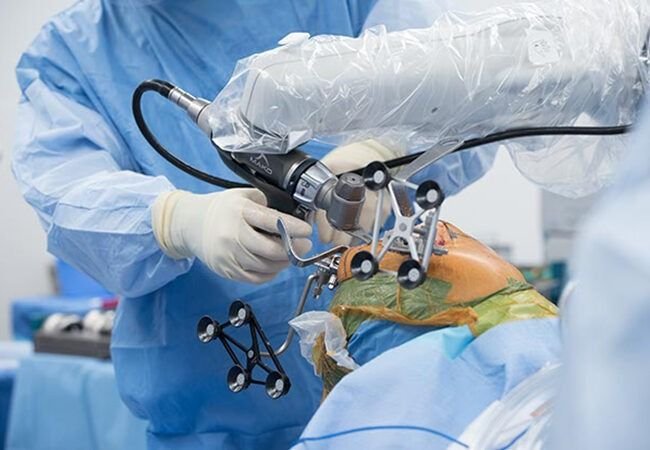
Robotic And Computer-Assisted Knee Replacement
Modern orthopedic surgery may use computer-assisted or robotic technologies in selected settings. These systems can assist surgeons with planning and execution during certain knee replacement procedures.
However, technology should complement surgical expertise rather than replace clinical judgment. The appropriate technology depends on the patient’s condition, the surgeon’s experience, available facilities, and the specific procedure.
Patients searching for a Knee Replacement Surgeon In Asifabad may therefore wish to ask whether computer-assisted or robotic techniques are available and whether such technology is suitable for their particular case.
It is also important to understand that robotic assistance does not mean that every patient will have the same outcome. Individual health, rehabilitation, implant selection, surgical technique, and adherence to postoperative care all influence recovery.
Diagnosis Before Knee Replacement Surgery
Accurate diagnosis is an important step before knee replacement. The surgeon usually begins by reviewing symptoms and medical history.
During the physical examination, the doctor may assess knee movement, stability, swelling, tenderness, alignment, and muscle strength.
Imaging can provide additional information about the condition of the joint. X-rays are commonly used to evaluate structural changes and the extent of arthritis.
The surgeon may also consider previous injuries, earlier treatments, medications, other medical conditions, and the patient’s activity requirements.
A Knee Replacement Surgeon In Asifabad uses this information to determine whether knee replacement is appropriate.
In some cases, additional evaluation may be necessary before surgery. This careful assessment helps the medical team plan treatment according to the patient’s individual needs.
Preparing For Knee Replacement Surgery
Preparation can help patients understand what to expect before and after knee replacement. During consultation, the surgeon may explain the procedure, anesthesia, hospitalization, potential risks, and rehabilitation.
Patients should provide complete information about their medical history and medicines. They should also follow instructions regarding food, medication, investigations, and physical preparation.
A Knee Replacement Surgeon In Asifabad may recommend appropriate preoperative exercises to support muscle strength and mobility when suitable.
Patients can also prepare their home environment for the recovery period. Keeping frequently used items within easy reach and arranging support for certain activities may make the initial recovery period easier.
Most importantly, patients should understand that knee replacement is a major procedure. Therefore, informed preparation and realistic expectations are important.
Physiotherapy After Knee Replacement
Physiotherapy is an important component of many knee replacement recovery plans. It helps patients gradually regain movement and strength.
After surgery, the muscles surrounding the knee may require strengthening. A physiotherapist can provide exercises designed around the patient’s recovery stage.
A Knee Replacement Surgeon In Asifabad may coordinate rehabilitation with a physiotherapy team. The program can focus on knee mobility, muscle strength, balance, walking ability, and functional movements.
Patients should perform exercises according to professional instructions. Doing too much too soon can place unnecessary stress on the recovering joint.
On the other hand, avoiding movement completely can contribute to stiffness and weakness.
Therefore, a balanced and supervised rehabilitation program can help patients progress safely.
Risks And Considerations Of Knee Replacement
Like other major surgical procedures, knee replacement has potential risks. These can include infection, blood clots, bleeding, stiffness, nerve or blood vessel problems, implant-related complications, and persistent symptoms.
The actual risk varies according to individual health, surgical factors, and other circumstances.
A Knee Replacement Surgeon In Asifabad should explain the potential benefits and risks before surgery. Patients should also disclose existing medical conditions and medications.
It is important to understand that surgery does not guarantee a specific outcome. Recovery can differ from one patient to another.
Therefore, patients should have a detailed discussion with their orthopedic surgeon and make an informed decision based on their individual medical situation.
Choosing A Knee Replacement Surgeon In Asifabad
Choosing the right Knee Replacement Surgeon In Asifabad requires careful consideration. Patients should look at qualifications, orthopedic experience, expertise in joint replacement, hospital facilities, surgical approach, and postoperative rehabilitation.
It is also important to choose a surgeon who communicates clearly. Patients should feel comfortable asking about the diagnosis, available treatments, surgical procedure, possible complications, and rehabilitation.
Furthermore, patients should understand where surgery will take place and what postoperative support will be available.
Rather than choosing a surgeon based only on the phrase “best knee replacement surgeon,” patients should consider the complete quality of care.
A good consultation should provide clear information and help patients understand their options.
Knee Replacement Surgeon In Asifabad For Patient-Centered Care
Choosing a Knee Replacement Surgeon In Asifabad should involve more than selecting a surgical procedure. Patients need complete care before, during, and after treatment.
A patient-centered approach considers pain levels, mobility, lifestyle, work requirements, age, general health, and personal expectations.
The surgeon should explain available options clearly and discuss both surgical and non-surgical treatments where appropriate.
Furthermore, patients should understand the importance of physiotherapy and follow-up after surgery.
When patients receive clear information, they can participate more confidently in treatment decisions.
Frequently Asked Questions About Knee Replacement Surgeon In Asifabad
What does a Knee Replacement Surgeon In Asifabad do?
A Knee Replacement Surgeon In Asifabad evaluates patients with severe knee pain and joint damage. The surgeon determines whether conservative treatment or knee replacement may be appropriate.
When is knee replacement recommended?
Knee replacement may be considered when severe joint damage causes persistent pain and functional limitations, particularly when appropriate non-surgical treatments no longer provide sufficient improvement.
Is knee replacement suitable for every arthritis patient?
No. Many patients with arthritis can manage their symptoms without surgery. Knee replacement is generally considered after evaluating the severity of joint damage and the patient’s symptoms and functional limitations.
What is total knee replacement?
Total knee replacement involves replacing damaged surfaces of the knee joint with artificial components. It may be considered when extensive arthritis affects the knee.
What is partial knee replacement?
Partial knee replacement replaces only the damaged portion of the knee. It may be appropriate for selected patients whose joint damage remains limited to one compartment.
How long does recovery after knee replacement take?
Recovery varies between patients. Rehabilitation, general health, muscle strength, surgical factors, and adherence to physiotherapy can all influence recovery.
Is physiotherapy necessary after knee replacement?
Physiotherapy is an important part of recovery for many patients. It can help improve knee movement, strength, balance, walking ability, and functional activities.
Can knee replacement reduce knee pain?
Knee replacement is designed to address pain associated with severe joint damage. However, individual results vary, and patients should discuss realistic expectations with their surgeon.
What should I ask a Knee Replacement Surgeon In Asifabad?
Ask about your diagnosis, treatment alternatives, surgical approach, implant options, potential risks, rehabilitation, expected recovery, follow-up, and activity restrictions.
How do I choose the right Knee Replacement Surgeon In Asifabad?
Consider the surgeon’s qualifications, experience in joint replacement, hospital facilities, communication, treatment approach, and postoperative rehabilitation support. A detailed consultation can help you make an informed decision.
Book A Consultation With A Knee Replacement Surgeon In Asifabad
If persistent knee pain is affecting your mobility or daily activities, consulting a Knee Replacement Surgeon In Asifabad can help you understand the cause and available treatment options.
An orthopedic evaluation can determine whether your symptoms relate to arthritis, injury, cartilage damage, ligament problems, or another condition.
Importantly, knee replacement is not automatically required for every patient. Depending on the diagnosis, treatment may begin with physiotherapy, exercises, medicines, lifestyle changes, or other conservative approaches.
When severe joint damage makes surgery appropriate, your orthopedic surgeon can explain the procedure, preparation, potential risks, and rehabilitation requirements.
Therefore, do not allow persistent knee pain to unnecessarily restrict your daily life. Seek professional orthopedic guidance and make an informed decision based on your individual condition.