Dr. Sameer Chepurwar | Orthopedic & Joint Replacement Surgeon In Chandrapur
Knee Replacement Surgery in Chandrapur for Advanced Knee Pain and Joint Care
If you are searching for Knee Replacement Surgery in Chandrapur, Shri Sai Gajanan Hospital | Dr. Chepurwar Orthopedic & Physiotherapy Center provides comprehensive knee replacement and orthopedic care under the guidance of Dr. Sameer Chepurwar, an experienced orthopedic surgeon with more than 28 years of experience. Knee replacement surgery can help appropriately selected patients who experience severe arthritis, advanced joint damage, persistent knee pain, stiffness, deformity, or significant difficulty with everyday movement. Moreover, modern knee replacement techniques aim to reduce pain, improve mobility, restore useful knee function, and help patients return to their daily activities.
At Shri Sai Gajanan Hospital, Dr. Sameer Chepurwar provides knee replacement surgery using modern surgical techniques, advanced implants, and personalized rehabilitation programs. Furthermore, Dr. Shweta Chepurwar provides physiotherapy and post-surgical rehabilitation to support recovery after orthopedic procedures.
What Is Knee Replacement Surgery?
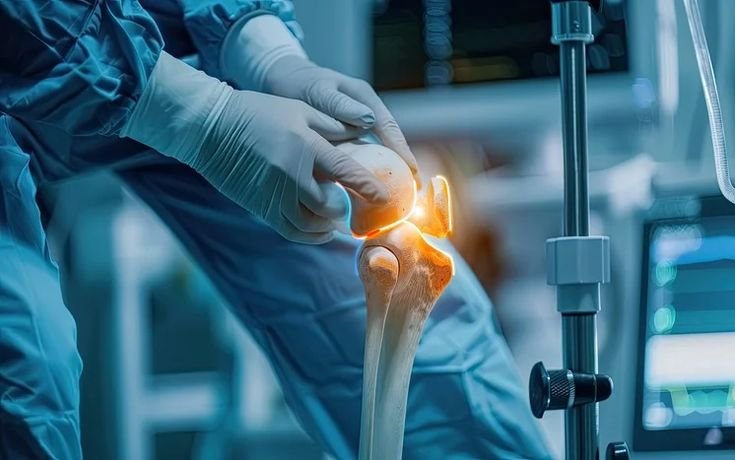
Knee replacement surgery, also known as knee arthroplasty, is an orthopedic procedure that replaces damaged portions of the knee joint with artificial components.
The knee contains bones, cartilage, ligaments, and other structures that work together to provide smooth movement. However, severe arthritis, injuries, degeneration, or other conditions can damage the cartilage and joint surfaces.
As the damage progresses, patients may experience pain, stiffness, swelling, reduced movement, and difficulty walking.
During knee replacement surgery, the orthopedic surgeon removes damaged joint surfaces and places suitable artificial components. The procedure aims to reduce pain and improve functional movement.
However, knee replacement does not suit every person with knee pain. An orthopedic surgeon first evaluates the patient’s symptoms, medical history, physical condition, imaging results, and response to previous treatments.
Therefore, professional evaluation remains essential before deciding on surgery.
Who May Need Knee Replacement Surgery?
Knee replacement may become an option when severe joint damage causes persistent symptoms and significantly affects daily life.
Patients may require evaluation if they experience:
- Severe or persistent knee pain
- Pain while walking
- Difficulty climbing stairs
- Difficulty standing after sitting
- Knee stiffness
- Recurrent swelling
- Reduced knee movement
- Knee instability
- Reduced walking distance
- Pain during rest
- Night pain
- Knee deformity
- Difficulty performing daily activities
- Advanced arthritis
The official knee replacement information from Shri Sai Gajanan Hospital lists severe knee pain, stiffness, swelling, deformity, reduced walking distance, limited movement, and advanced osteoarthritis among situations that may indicate the need for evaluation.
However, symptoms alone do not determine the need for surgery. Instead, the orthopedic surgeon evaluates the overall condition before recommending an appropriate treatment.
Common Conditions That Can Lead to Knee Replacement
Several conditions can damage the knee joint over time.
Osteoarthritis
Osteoarthritis is one of the most common causes of advanced knee joint damage. As cartilage gradually wears down, patients may develop pain, stiffness, swelling, and reduced mobility.
Rheumatoid Arthritis
Rheumatoid arthritis can cause inflammation and progressive joint damage. In severe cases, the condition can significantly affect knee function.
Post-Traumatic Arthritis
Previous fractures, ligament injuries, or other serious knee injuries can contribute to arthritis later in life.
Degenerative Joint Disease
Age-related or progressive degeneration can gradually reduce joint function and cause persistent discomfort.
Knee Deformities
Severe bow-legged or knock-knee deformities can affect normal joint mechanics and may require surgical correction in selected patients.
Severe Knee Injury
Certain serious injuries can damage the joint sufficiently to require replacement.
Failed Previous Knee Surgery
Some patients may develop persistent problems after previous procedures and require further orthopedic evaluation.
Shri Sai Gajanan Hospital lists osteoarthritis, rheumatoid arthritis, post-traumatic arthritis, degenerative joint disease, cartilage damage, knee deformities, severe knee injury, failed previous surgery, and advanced joint wear among conditions treated with knee replacement.
Knee Pain Treatment Before Knee Replacement
Not every patient with knee pain needs surgery.
Initially, an orthopedic specialist may recommend conservative treatment depending on the underlying condition. Treatment may include medication, physiotherapy, activity modification, weight management, exercises, injections, or other appropriate approaches.
The purpose of non-surgical treatment is to control symptoms, maintain joint function, and delay or avoid surgery when possible.
However, advanced arthritis can continue to damage the joint. If conservative treatment no longer provides adequate relief and the condition significantly affects daily life, the orthopedic surgeon may discuss knee replacement.
Shri Sai Gajanan Hospital provides arthritis and joint pain treatment using approaches that can include medications, lifestyle modifications, physiotherapy, joint injections, minimally invasive procedures, and joint replacement when appropriate.
Therefore, patients should not assume that surgery is the first option. Instead, an orthopedic consultation should determine the most suitable treatment.
Knee Replacement Surgeon in Chandrapur
Choosing an experienced orthopedic surgeon is an important part of knee replacement treatment.
Dr. Sameer Chepurwar is an orthopedic surgeon practicing at Shri Sai Gajanan Hospital in Chandrapur. His official profile states that he has more than 28 years of experience and specializes in joint replacement surgery, arthroscopic surgery, trauma care, fracture management, and sports injury treatment.
His approach combines orthopedic expertise with individualized treatment planning, rehabilitation, and long-term musculoskeletal care.
Furthermore, the hospital provides physiotherapy and rehabilitation through Dr. Shweta Chepurwar, who has more than 15 years of experience in physiotherapy and rehabilitation care.
Therefore, patients can receive orthopedic consultation, surgical care, and rehabilitation support through the same healthcare center.
Diagnosis Before Knee Replacement Surgery
A detailed assessment helps the orthopedic surgeon determine whether knee replacement is appropriate.
Before surgery, the doctor may evaluate:
- Medical history
- Knee pain and symptoms
- Physical movement
- Joint stability
- Range of motion
- Walking pattern
- Muscle strength
- Knee X-rays
- MRI when required
- Blood investigations
- Bone quality
- Cardiac fitness
- Pre-anesthetic fitness
The hospital’s knee replacement information states that its evaluation can include medical history, physical examination, gait analysis, X-rays, MRI when required, blood investigations, bone-quality assessment, cardiac fitness evaluation, and pre-anesthetic assessment.
Consequently, comprehensive evaluation helps the surgeon understand the extent of joint damage and select an appropriate surgical approach.
Types of Knee Replacement Surgery
The appropriate type of knee replacement depends on the extent and location of joint damage.
Total Knee Replacement
A Total Knee Replacement (TKR) replaces damaged surfaces across the affected parts of the knee joint.
Doctors may recommend this approach for patients with advanced arthritis affecting multiple compartments of the knee.
The primary objective is to reduce pain and improve useful knee function.
Partial Knee Replacement
A Partial Knee Replacement (PKR) replaces only the damaged portion of the knee while preserving healthier parts of the joint.
However, only selected patients qualify for this procedure. The surgeon evaluates the location of arthritis, ligament condition, alignment, and other factors before making a recommendation.
Bilateral Knee Replacement
Some patients require treatment for both knees. Depending on the patient’s health and orthopedic condition, the surgeon may perform procedures during the same hospitalization or in separate stages.
Revision Knee Replacement
Revision surgery involves replacing or correcting a previous knee implant when it has failed, worn out, become unstable, or developed another significant problem.
The hospital lists total, partial, bilateral, and revision knee replacement among its knee replacement procedures.
Benefits of Knee Replacement Surgery
Modern knee replacement surgery can provide several potential benefits for appropriately selected patients.
These may include:
- Significant pain relief
- Improved knee movement
- Better walking ability
- Improved joint stability
- Correction of certain deformities
- Greater independence
- Improved ability to perform daily activities
- Better quality of life
- Improved confidence while moving
However, outcomes vary between patients.
Surgery represents only one part of recovery. Rehabilitation, adherence to medical instructions, appropriate exercise, and regular follow-up also influence recovery.
Therefore, patients should maintain realistic expectations and follow their orthopedic and physiotherapy team’s recommendations.
How Is Knee Replacement Surgery Performed?
The exact surgical technique depends on the patient’s condition and the surgeon’s treatment plan.
Generally, knee replacement involves several stages.
First, the patient receives appropriate anesthesia. Next, the surgeon accesses the knee joint and removes damaged cartilage and bone surfaces.
Then, the surgeon prepares the joint surfaces and positions the artificial components.
After implant placement, the surgeon checks alignment, movement, and stability. Finally, the incision is closed and the patient moves to postoperative care.
Shri Sai Gajanan Hospital describes its knee replacement procedure as using modern surgical techniques, high-quality artificial implants, and attention to proper knee alignment.
The exact procedure can vary according to the patient’s anatomy, joint damage, implant selection, and surgical requirements.
Advanced Knee Replacement Techniques
Modern orthopedic surgery continues to develop with improvements in surgical planning, implants, instrumentation, and rehabilitation.
Technology can support surgeons during knee replacement by helping them plan the procedure and assess alignment and implant positioning.
However, the surgeon remains responsible for clinical decisions throughout the operation.
Furthermore, the most appropriate technique depends on the patient’s individual condition.
Therefore, patients should discuss surgical options with their orthopedic surgeon rather than selecting a technique solely because it sounds more advanced.
Robotic Knee Replacement in Chandrapur
Patients searching for Robotic Knee Replacement in Chandrapur should first understand that robotic assistance is a technology used to support certain parts of knee replacement surgery.
Robotic-assisted procedures can involve computer-based surgical planning and technology-assisted execution.
However, a robotic system does not replace the orthopedic surgeon. The surgeon remains responsible for assessing the patient, planning treatment, performing the operation, and managing the patient’s care.
Shri Sai Gajanan Hospital’s official website lists Robotic Knee Replacement in Chandrapur among its orthopedic search/service terms. However, patients should confirm the availability of a specific robotic system and whether robotic assistance is appropriate for their individual surgery during consultation.
Therefore, patients should discuss conventional and technology-assisted knee replacement options directly with the orthopedic team.
Recovery After Knee Replacement Surgery
Recovery begins soon after surgery and progresses gradually.
Patients typically work with their orthopedic and physiotherapy team to regain knee movement, strength, balance, and walking ability.
The hospital states that many patients begin standing and walking with assistance within approximately 24 hours after surgery, although recovery varies between individuals.
During recovery, patients may work on:
- Knee flexibility
- Muscle strengthening
- Walking
- Balance
- Stair climbing
- Functional movement
- Gradual return to daily activities
Furthermore, patients should follow all instructions related to medication, wound care, activity, exercise, and follow-up visits.
Physiotherapy After Knee Replacement
Physiotherapy plays a crucial role after knee replacement surgery.
After surgery, muscles around the knee may become weak. The joint may also feel stiff. Therefore, structured rehabilitation can help patients progressively restore movement and strength.
Dr. Shweta Chepurwar provides post-surgical and orthopedic rehabilitation at Shri Sai Gajanan Hospital. Her listed rehabilitation expertise includes orthopedic conditions, sports injuries, and post-surgical recovery.
Physiotherapy may focus on:
- Improving knee flexibility
- Strengthening the thigh muscles
- Improving walking ability
- Improving balance
- Reducing stiffness
- Restoring functional movement
- Improving confidence
- Supporting a safe return to routine activities
Moreover, rehabilitation should progress according to the patient’s condition.
Therefore, patients should perform exercises according to the physiotherapist’s instructions instead of attempting strenuous exercises independently.
Post-Surgical Rehabilitation
Recovery continues after the patient leaves the hospital.
Post-surgical rehabilitation can include mobility training, range-of-motion exercises, strengthening, balance training, and functional rehabilitation.
At Shri Sai Gajanan Hospital, Dr. Shweta Chepurwar provides personalized post-surgical rehabilitation according to the patient’s medical condition, surgery, physical abilities, and recovery goals.
Orthopedic rehabilitation can also support patients recovering from knee replacement surgery, fractures, ligament injuries, sports injuries, and other musculoskeletal conditions.
Consequently, structured rehabilitation can support the transition from surgery to everyday activities.
Why Choose Shri Sai Gajanan Hospital for Knee Replacement?
Shri Sai Gajanan Hospital | Dr. Chepurwar Orthopedic & Physiotherapy Center provides orthopedic and joint replacement services in Chandrapur.
The hospital describes its facilities as including modern infrastructure, advanced diagnostic facilities, and operation theatres. It also provides orthopedic care, joint replacement surgery, trauma and fracture management, sports injury treatment, and physiotherapy and rehabilitation.
Dr. Sameer Chepurwar has more than 28 years of orthopedic experience and specializes in joint replacement surgery, arthroscopic surgery, trauma care, fracture management, and sports injury treatment.
Furthermore, Dr. Shweta Chepurwar provides physiotherapy and rehabilitation with more than 15 years of experience.
Therefore, patients can access orthopedic evaluation, knee replacement surgery, and rehabilitation support through a coordinated treatment approach.
Knee Replacement Surgery in Chandrapur for Advanced Joint Care
If you are looking for Knee Replacement Surgery in Chandrapur, Shri Sai Gajanan Hospital | Dr. Chepurwar Orthopedic & Physiotherapy Center provides comprehensive orthopedic and knee replacement care under the guidance of Dr. Sameer Chepurwar.
The hospital provides knee replacement surgery for conditions including advanced osteoarthritis, rheumatoid arthritis, post-traumatic arthritis, degenerative joint disease, knee deformities, and other severe joint problems.
Furthermore, Dr. Sameer Chepurwar brings more than 28 years of orthopedic experience, while Dr. Shweta Chepurwar provides post-surgical physiotherapy and rehabilitation.
Therefore, patients can receive evaluation, surgical treatment, and rehabilitation support according to their individual needs.
Frequently Asked Questions About Knee Replacement Surgery in Chandrapur
1. What is knee replacement surgery?
Knee replacement surgery is an orthopedic procedure that replaces damaged portions of the knee joint with artificial components. It can help appropriately selected patients reduce chronic knee pain and improve useful mobility.
2. Who needs knee replacement surgery?
Patients with severe arthritis, advanced joint damage, persistent pain, significant stiffness, deformity, or major difficulty performing daily activities may require knee replacement evaluation.
3. Who is a knee replacement surgeon in Chandrapur?
Dr. Sameer Chepurwar is an orthopedic and joint replacement surgeon practicing at Shri Sai Gajanan Hospital in Chandrapur. His official profile states that he has more than 28 years of experience and specializes in joint replacement surgery.
4. Is knee replacement suitable for every patient with knee pain?
No. Doctors generally consider knee replacement when significant joint damage and symptoms persist despite appropriate non-surgical treatment. An orthopedic evaluation determines whether surgery is appropriate.
5. What is total knee replacement?
Total knee replacement replaces damaged surfaces across the affected portions of the knee joint with artificial components. It is commonly considered for advanced arthritis affecting multiple areas of the knee.
6. What is partial knee replacement?
Partial knee replacement replaces only the damaged portion of the knee while preserving healthier parts of the joint. However, only selected patients qualify for this procedure.
7. How long does recovery take after knee replacement?
Recovery varies between patients. The hospital states that many patients resume routine activities within approximately 6–12 weeks, while complete recovery can continue for several months.
8. Is physiotherapy necessary after knee replacement?
Physiotherapy plays an important role in recovery. It can help improve knee movement, muscle strength, walking ability, balance, flexibility, and functional independence.
9. How much does knee replacement surgery cost in Chandrapur?
The cost can vary depending on the type of procedure, implant, hospital stay, investigations, anesthesia, medicines, and rehabilitation requirements. Patients should obtain a personalized estimate after consultation.
Book a Consultation for Knee Replacement in Chandrapur
Persistent knee pain can affect walking, work, sleep, exercise, and everyday independence. Therefore, timely orthopedic evaluation can help identify the cause of your symptoms and determine an appropriate treatment approach.
At Shri Sai Gajanan Hospital | Dr. Chepurwar Orthopedic & Physiotherapy Center, patients can access knee replacement surgery, joint replacement care, orthopedic consultation, trauma treatment, sports injury management, and post-surgical rehabilitation.
The hospital is located at Hospital Ward, Kasturba Road, near Jubilee High School, Bazar Ward, Chandrapur, Maharashtra 442402.
Therefore, if you are searching for Knee Replacement Surgery in Chandrapur, consult the orthopedic team for a detailed evaluation and personalized treatment plan.